Director of Design & Research
At Socrata I led the UX Design and Research teams, responsible for all product design across the Socrata suite of government open data applications. My main mission was to completely redesign how public data was gathered, combined, and visualized—resulting in a patented new interface paradigm.
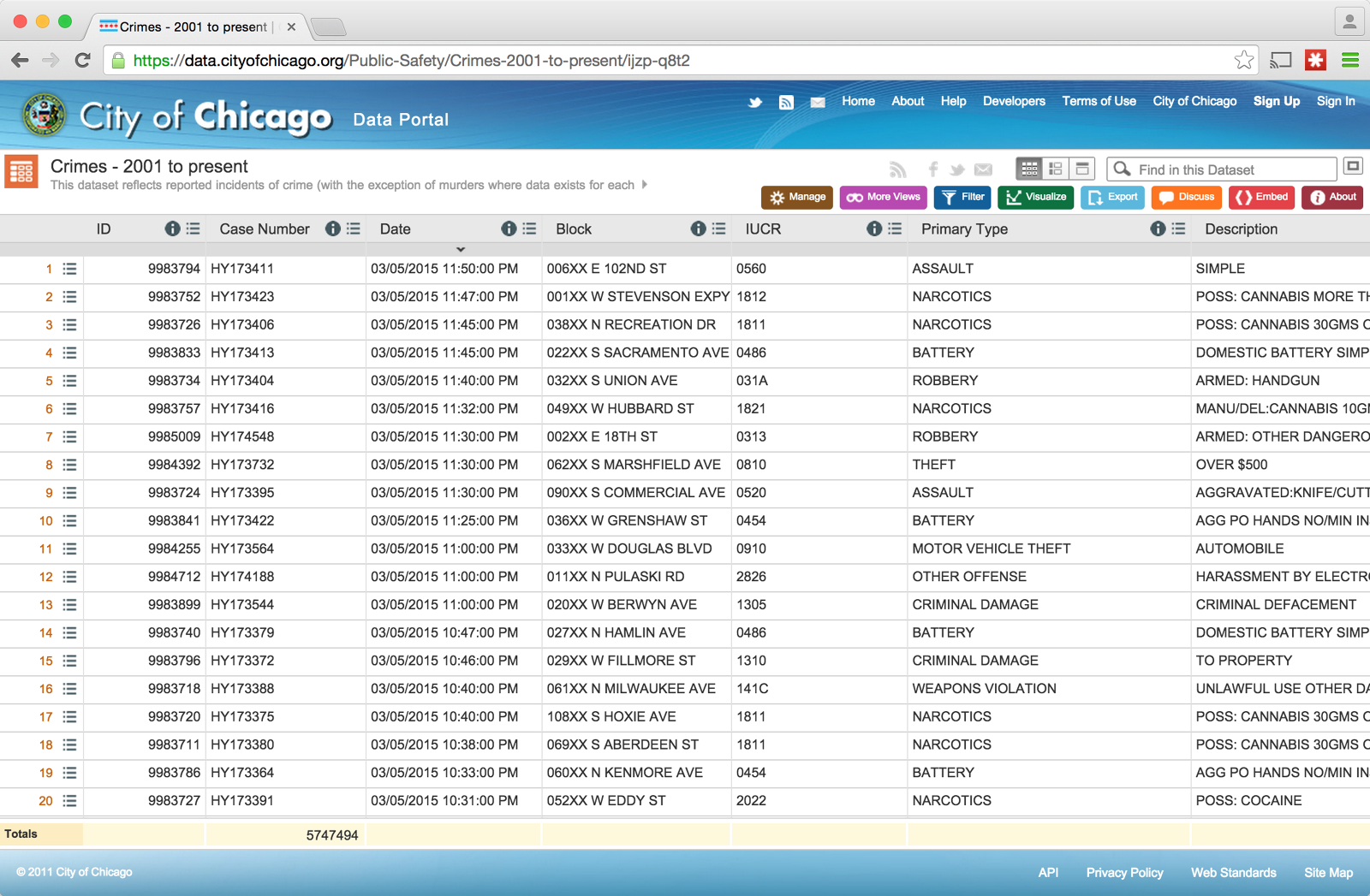
When I joined Socrata, the platform had accumulated years of UX and design debt. Customers were very unhappy with the user experience—it was a one-size-fits-all product that didn't serve any persona well.
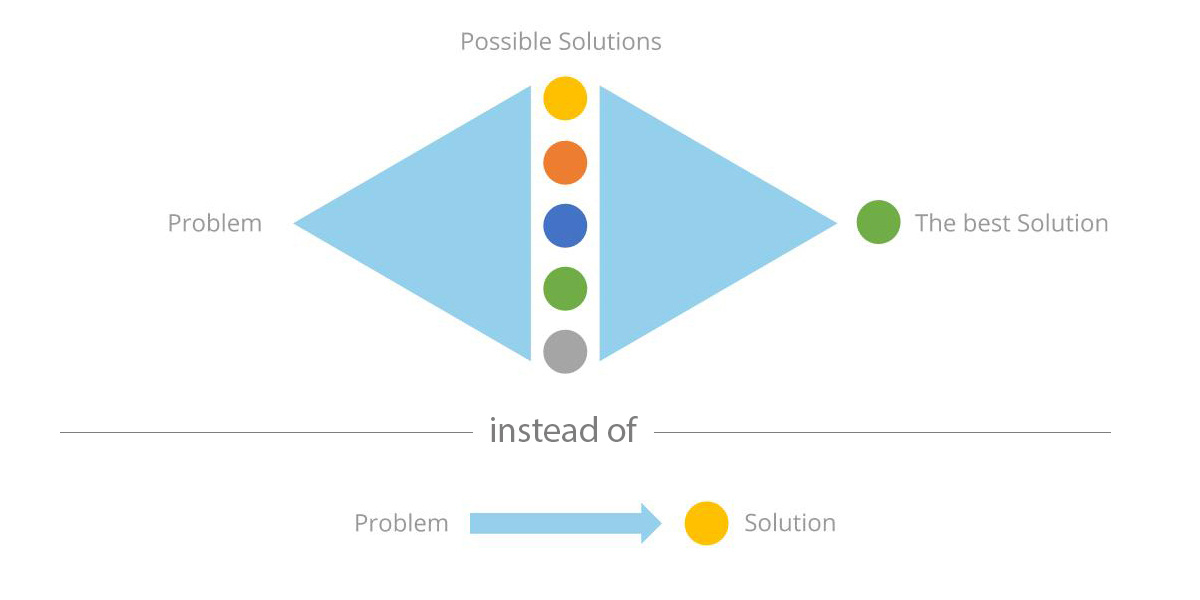
My main goal was to dramatically redesign this product taking a persona and scenario-driven approach, making government data accessible and engaging for citizens.
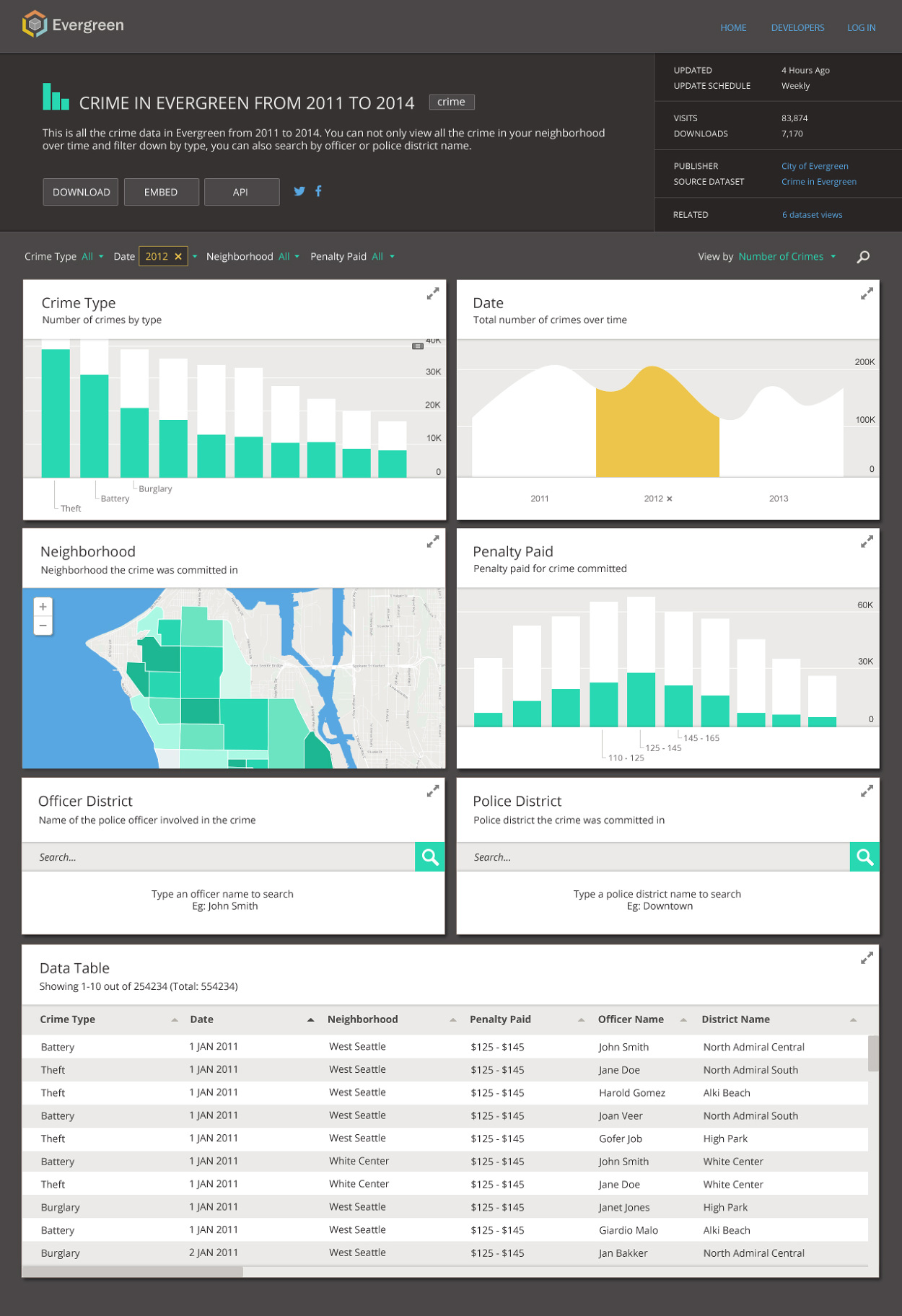
During the first 3 months, my team and I developed a completely new innovative user interface paradigm which greatly improved data visualization, understanding, and user engagement.
We tested the interaction design with customers and citizens in a large-scale qualitative usability study with excellent results. We generated considerable customer excitement and turned around some of the most disgruntled customers. We patented this new interface.
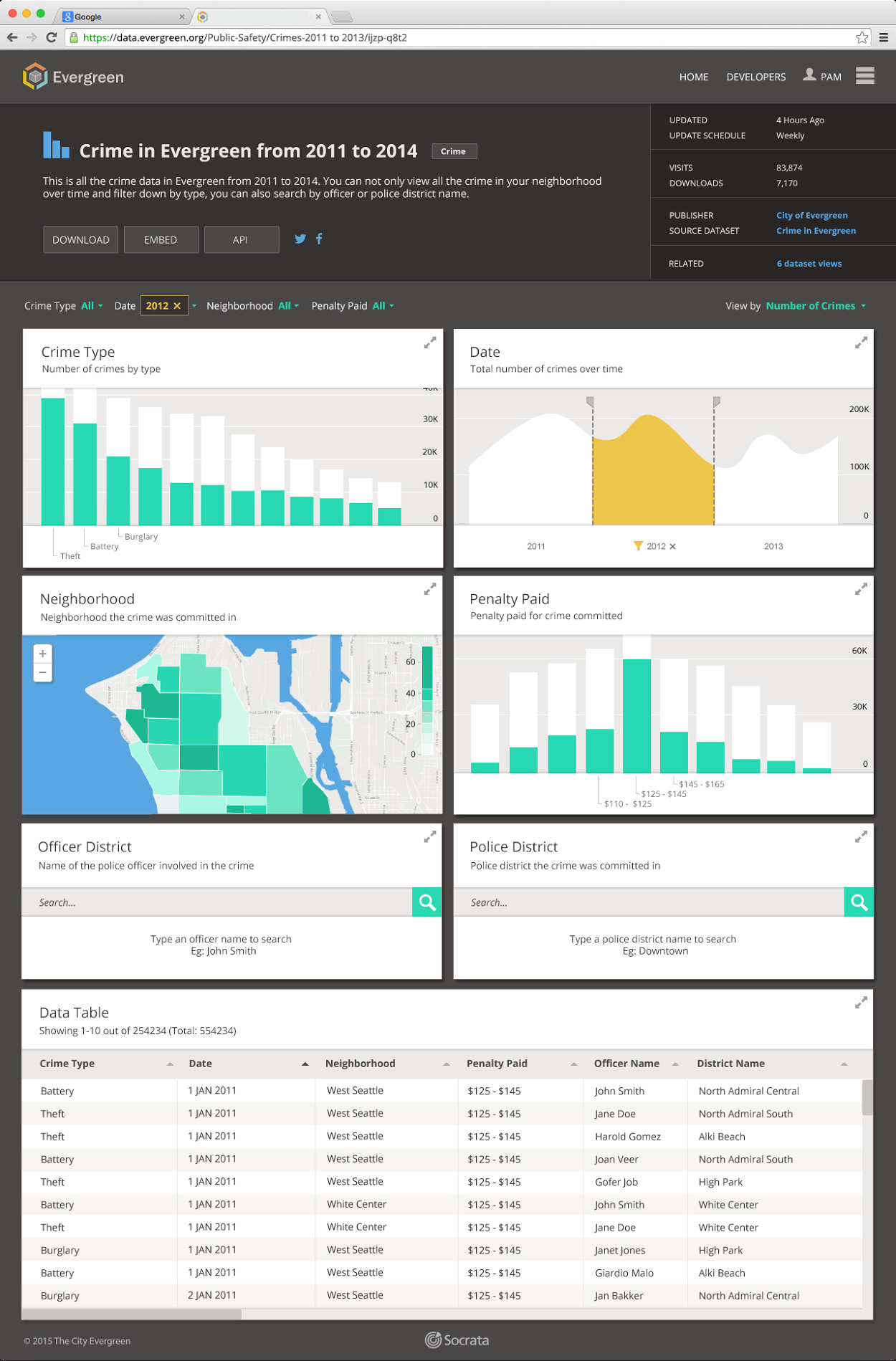
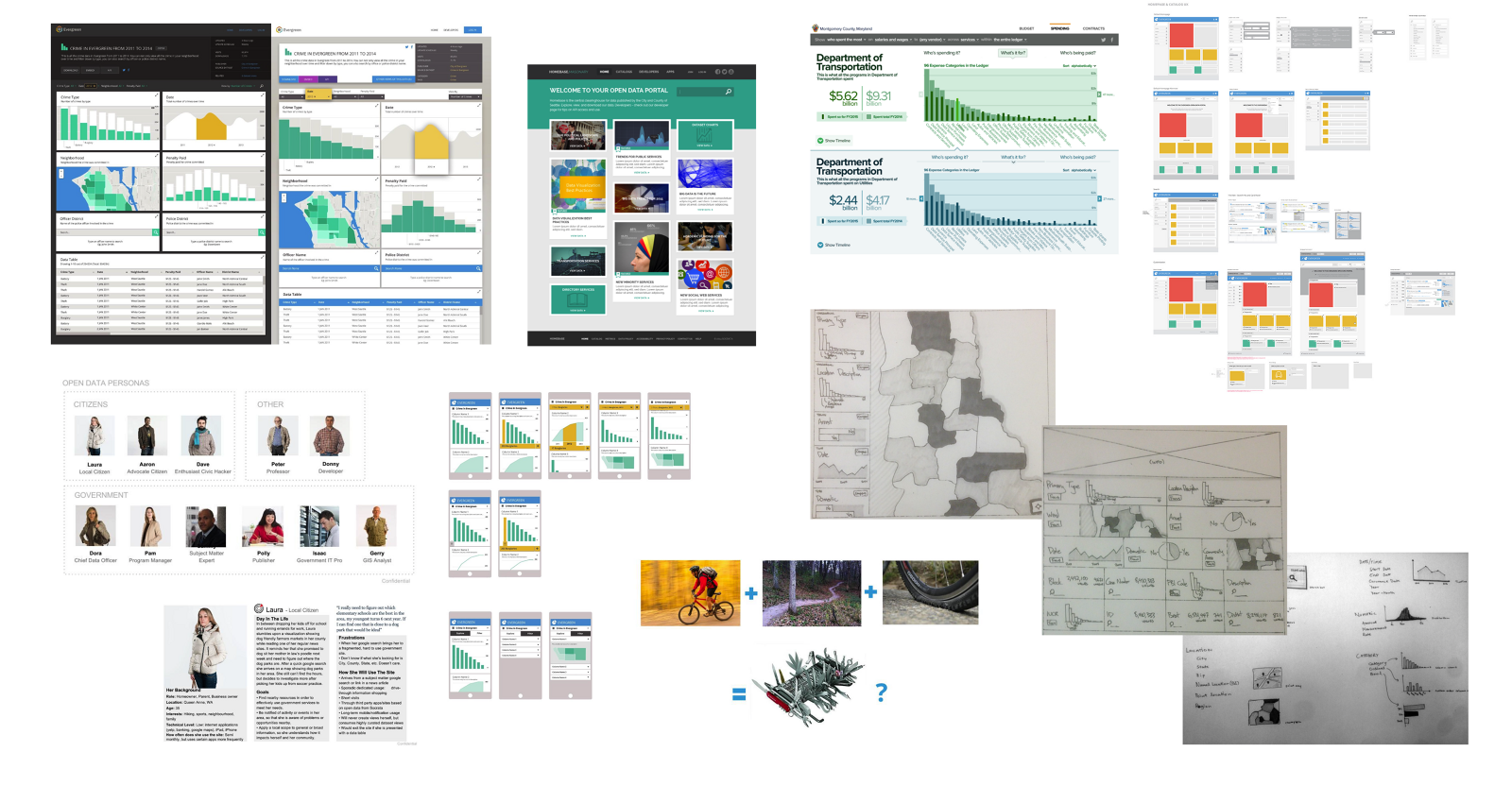
I personally designed 4 distinct visual concepts that my team tested with nearly 100 citizens and government employees. We developed brand adjectives like "approachable" and "trustworthy" and asked participants to rate each concept.
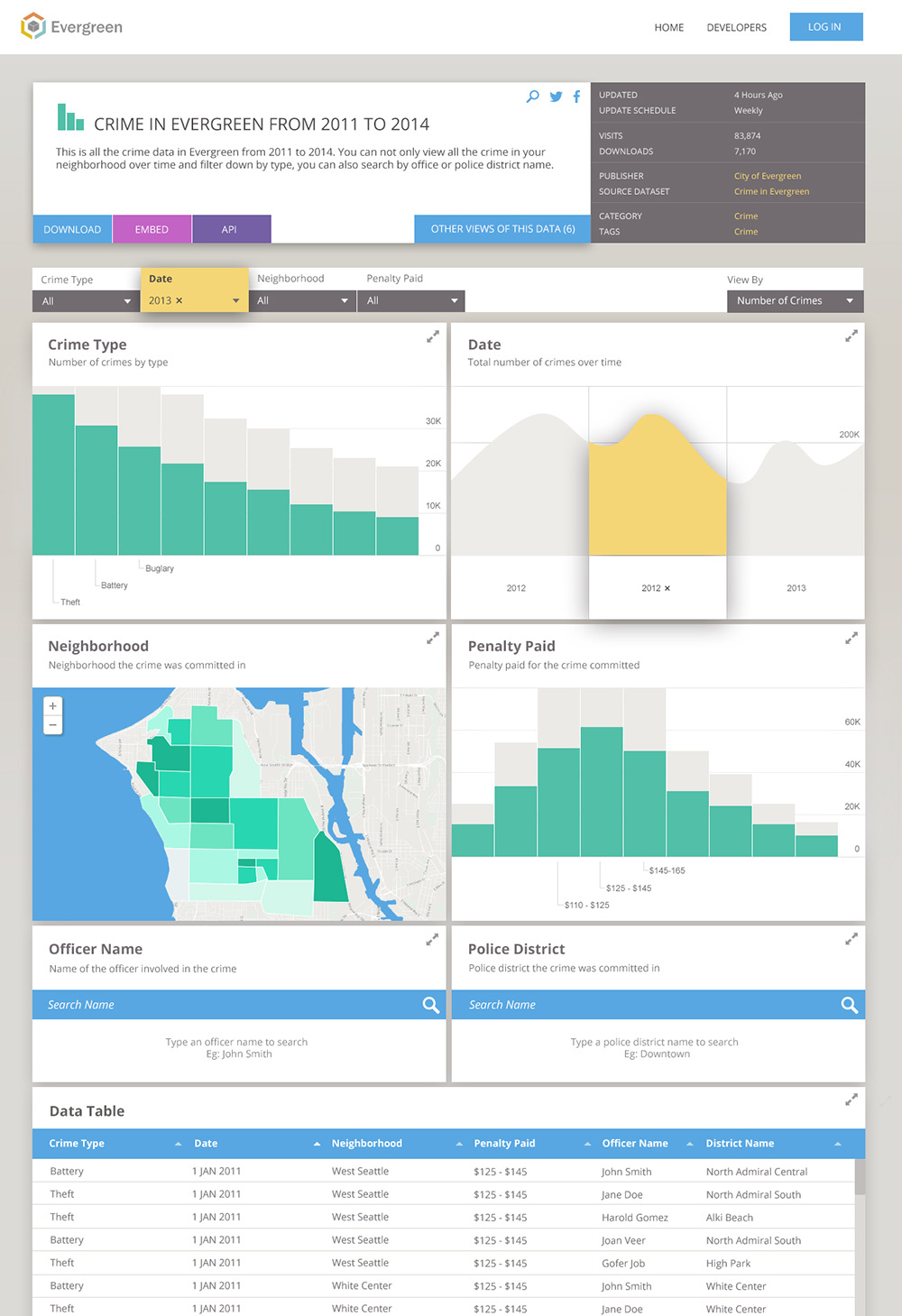
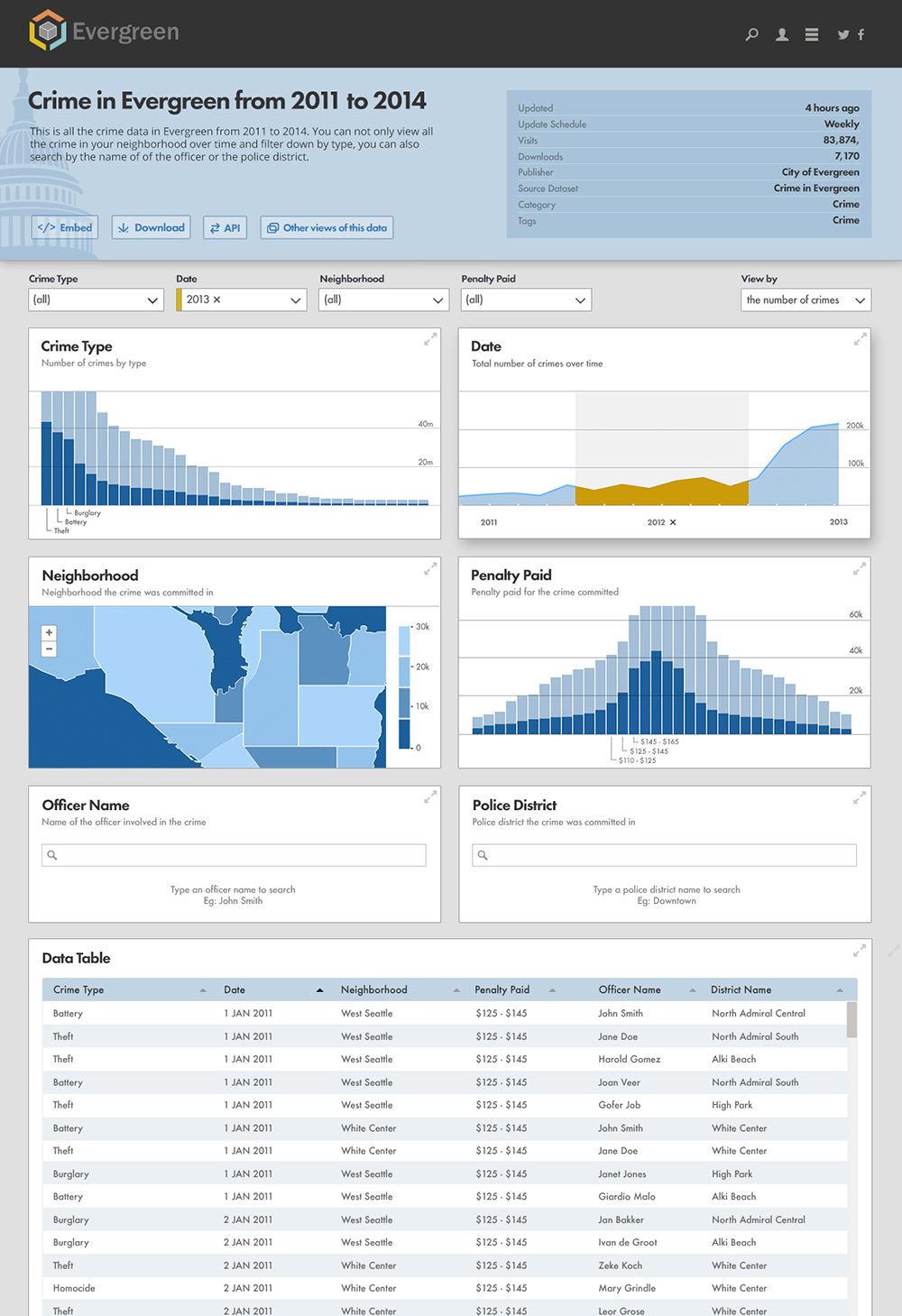
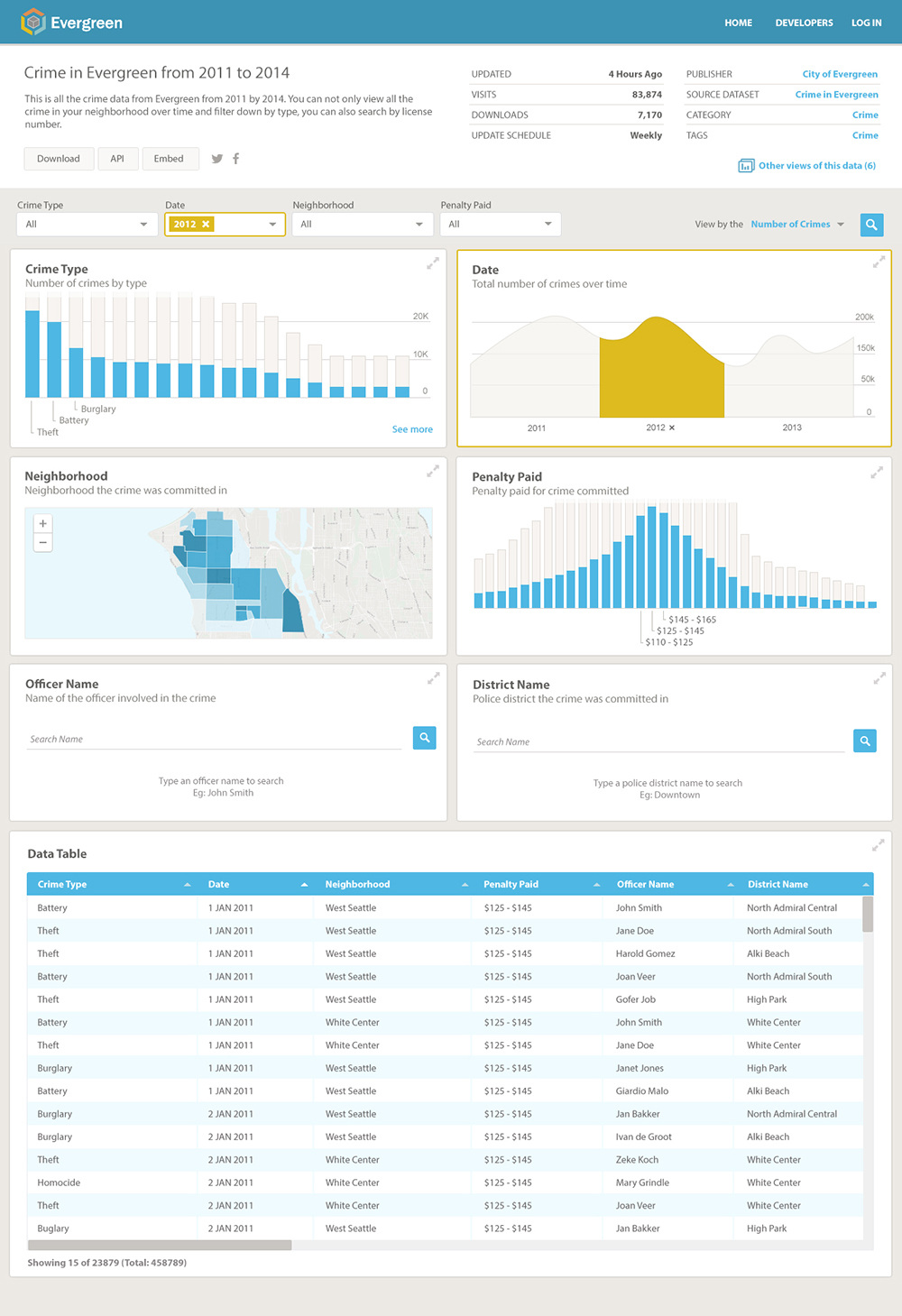
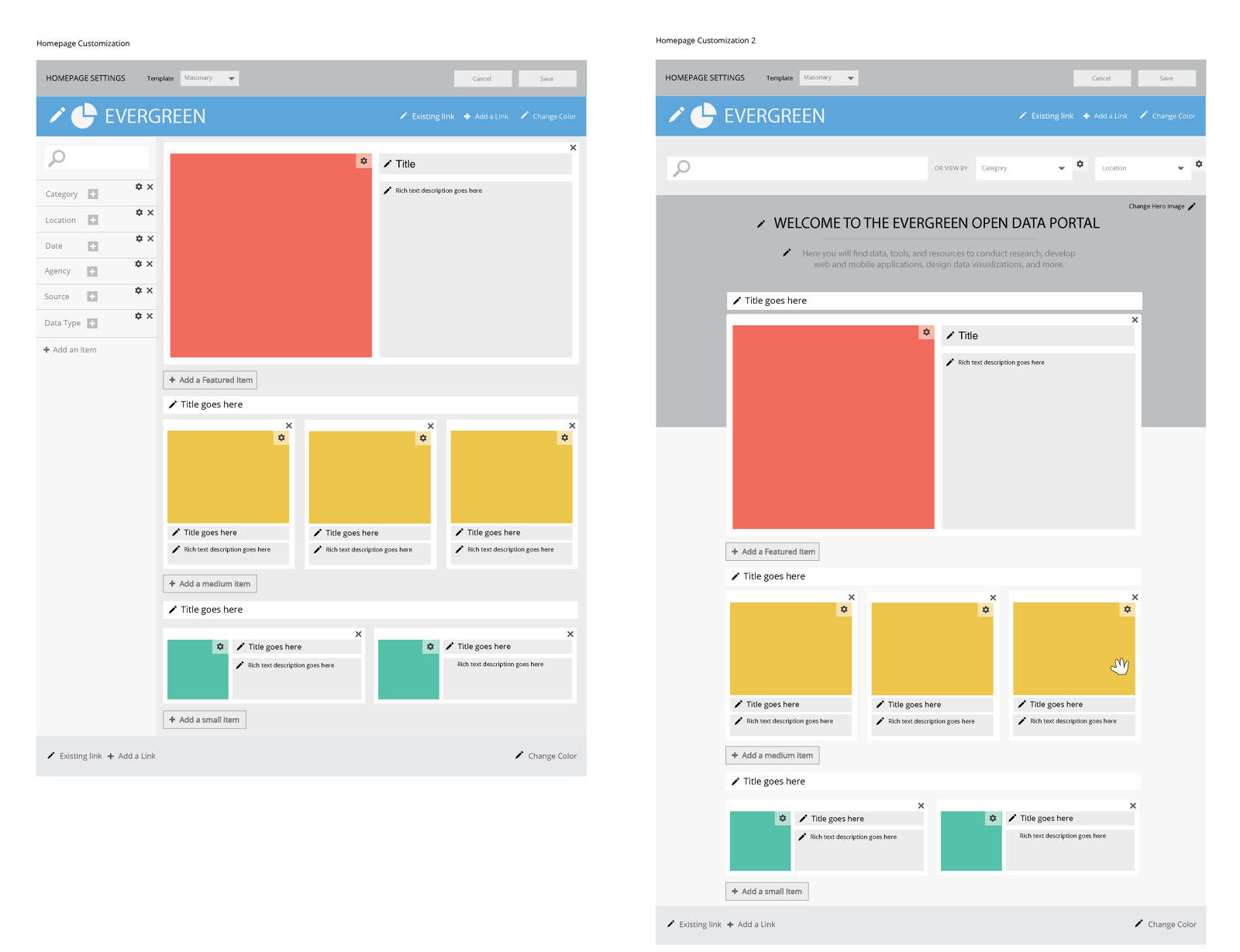
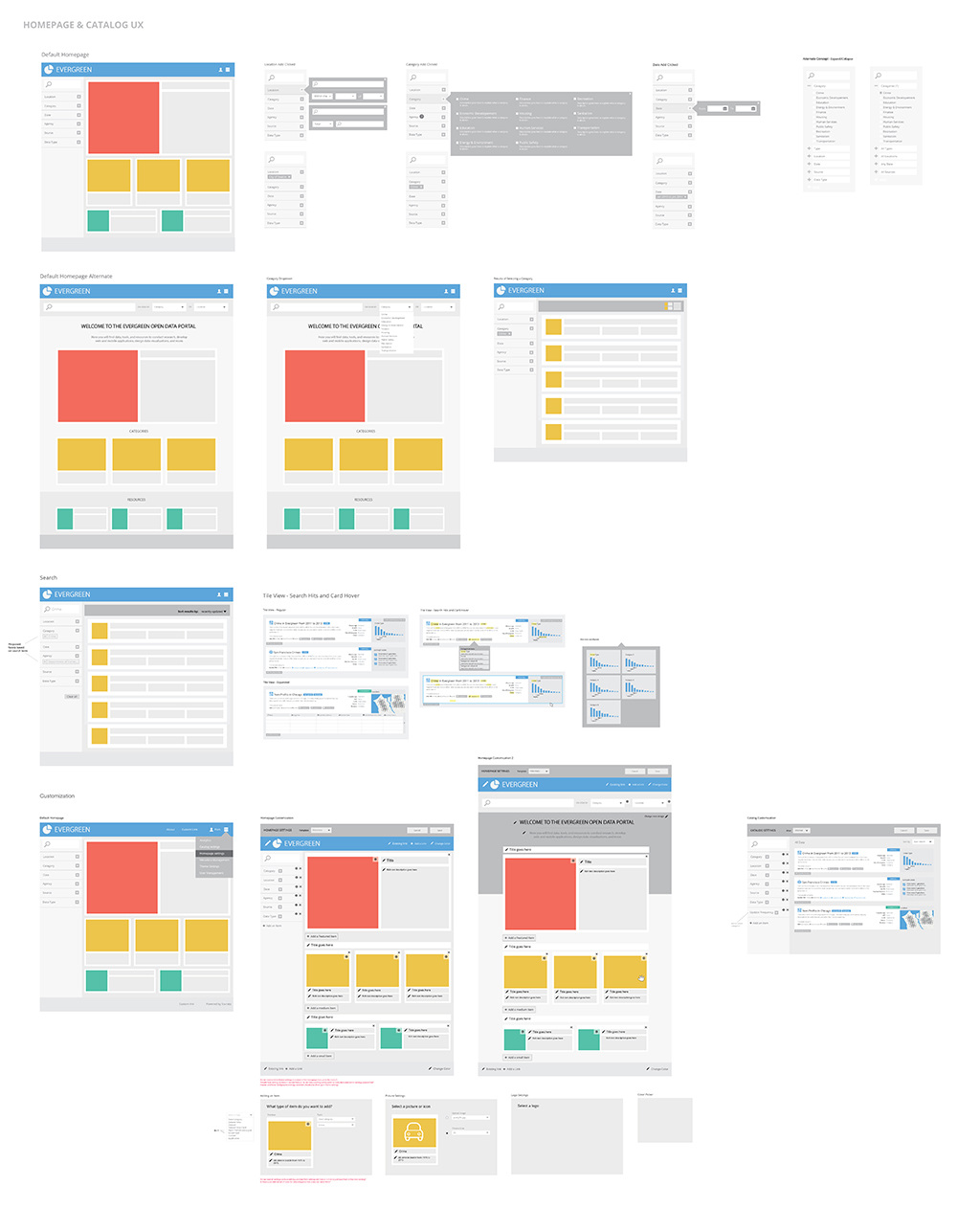
Hands-on design work defining the information architecture and core interaction design for the Open Data Portal homepage and data catalog experiences.
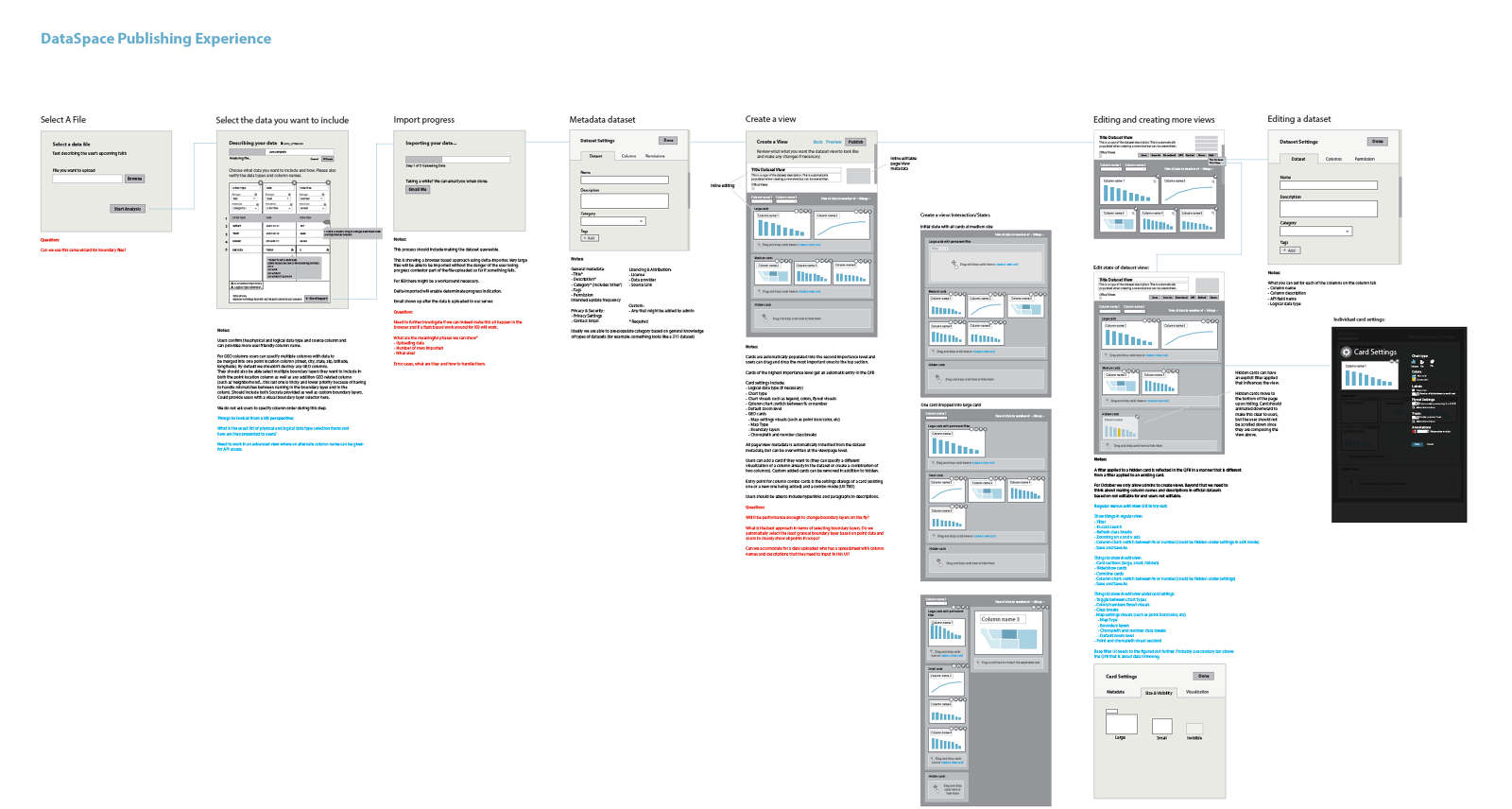
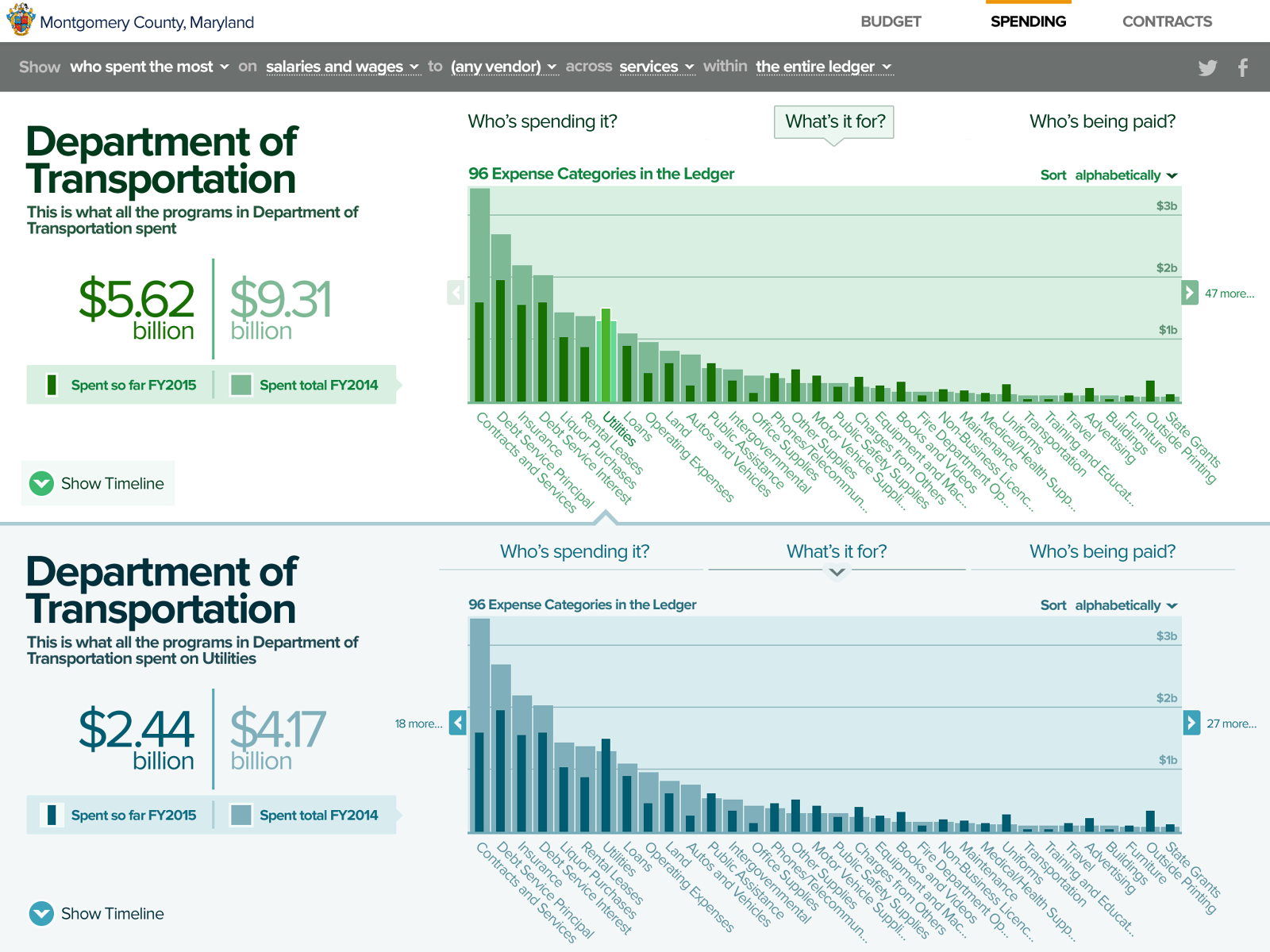
High-fidelity design of Socrata financial applications for government spending transparency.
Designed multiple customer homepage template concepts to accommodate different government branding needs.
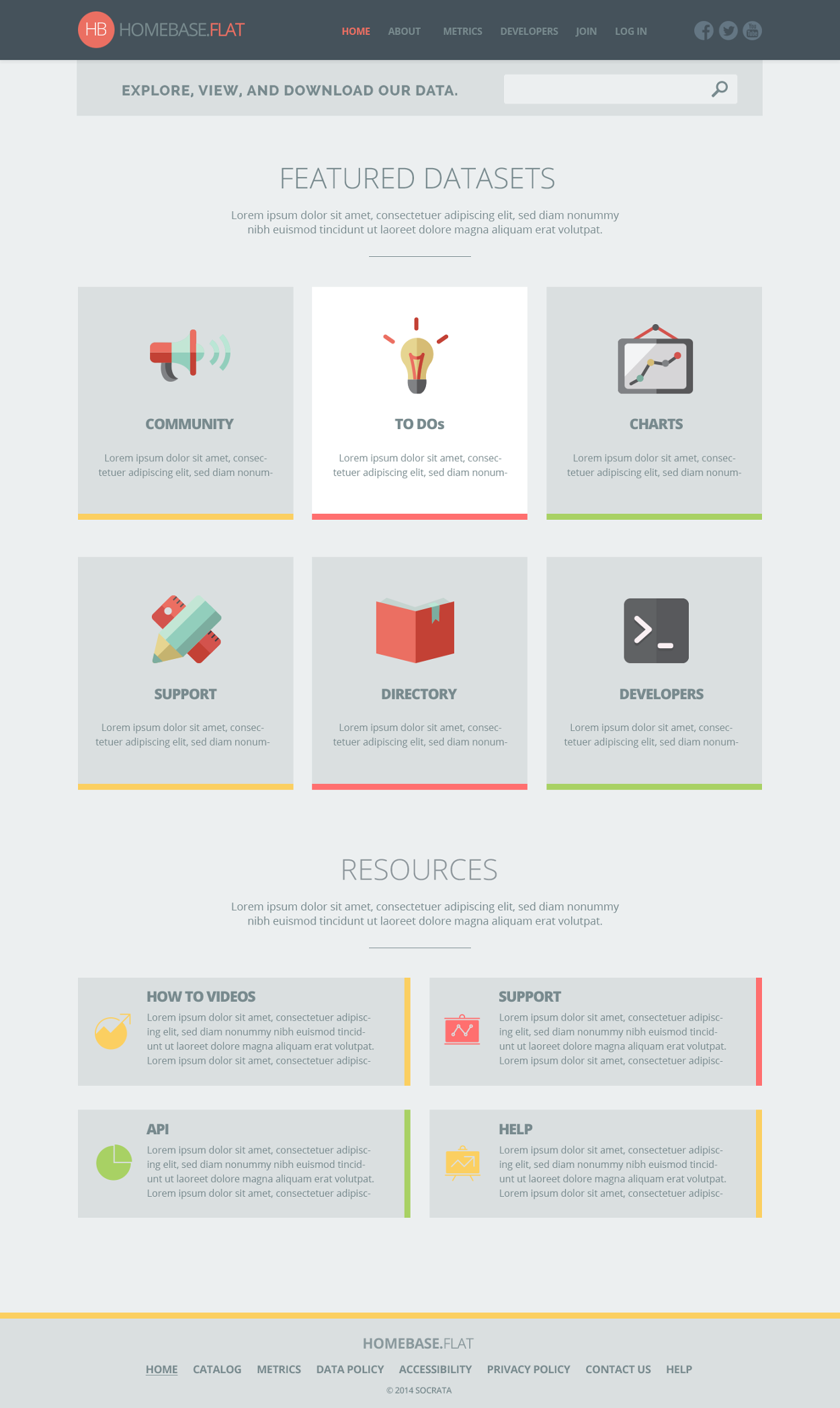
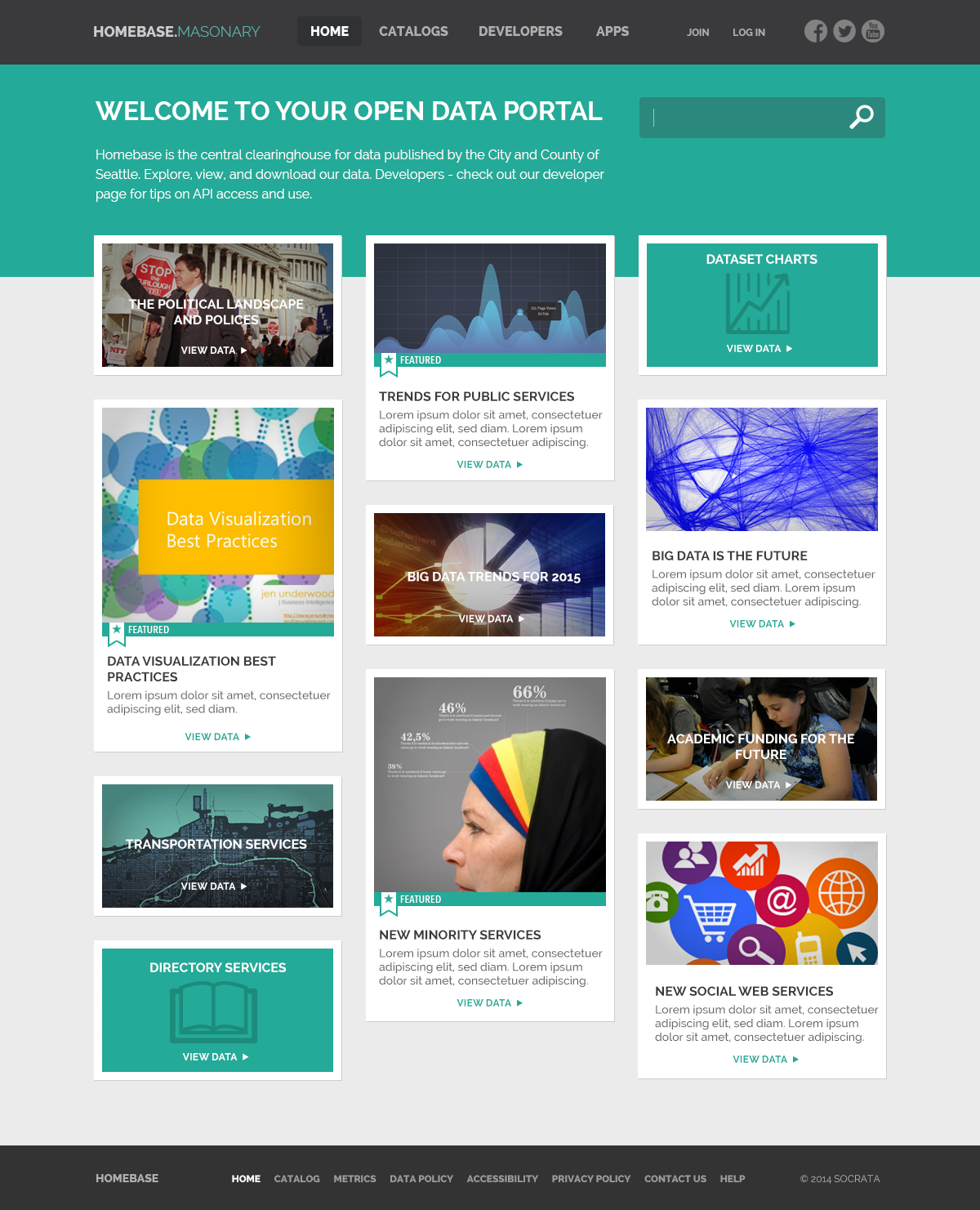
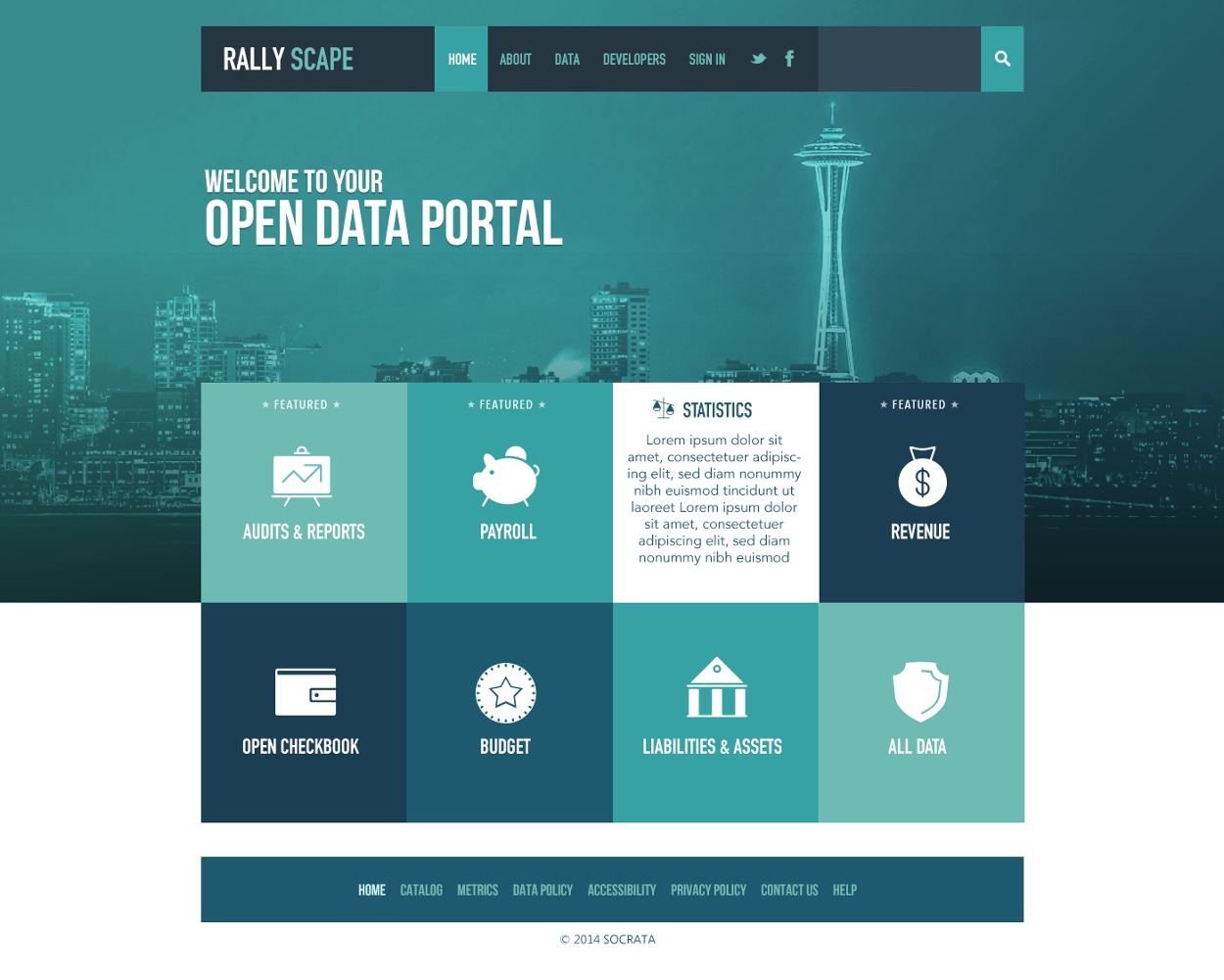
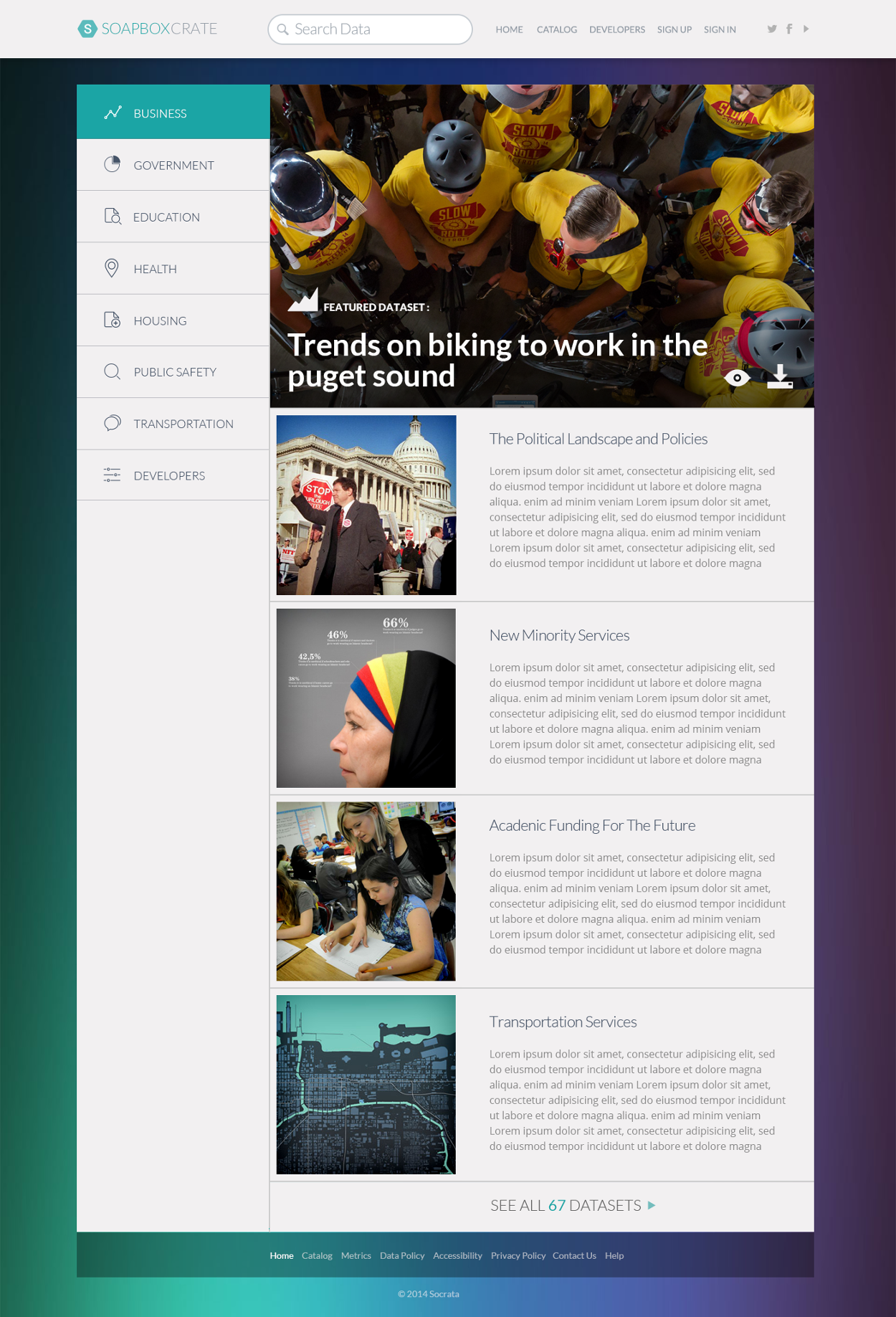
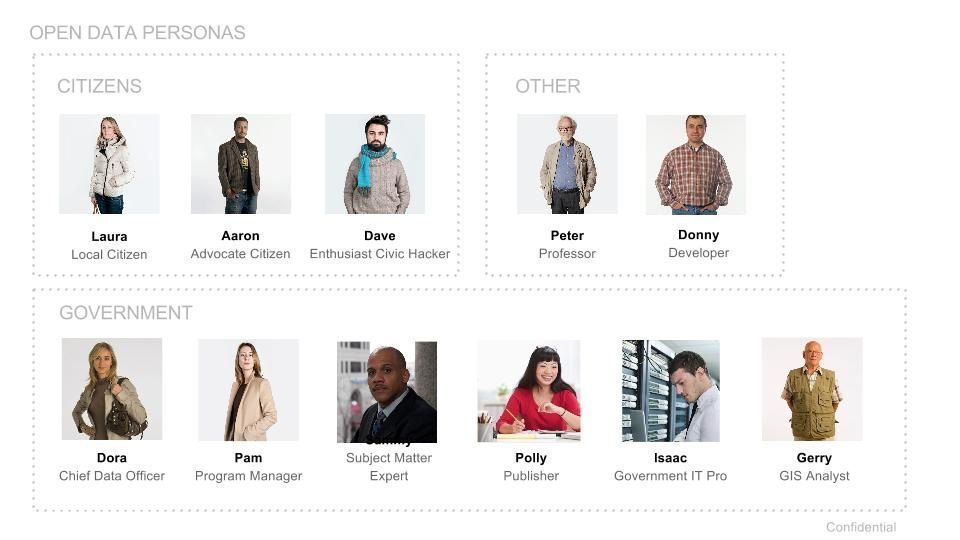
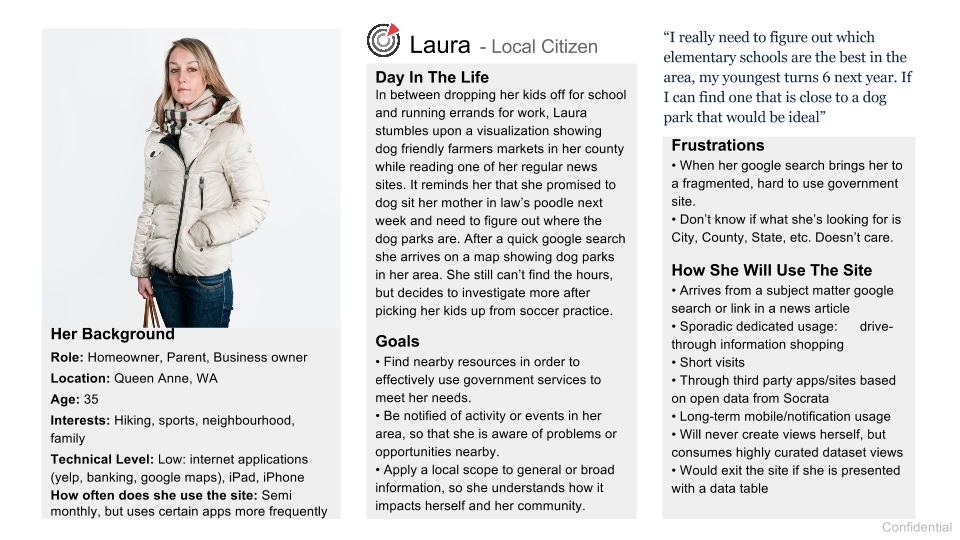
Developed lightweight behavior personas including direct customer feedback and profiling usability testing participants. These were used widely across the company—in product, engineering, sales, and training.
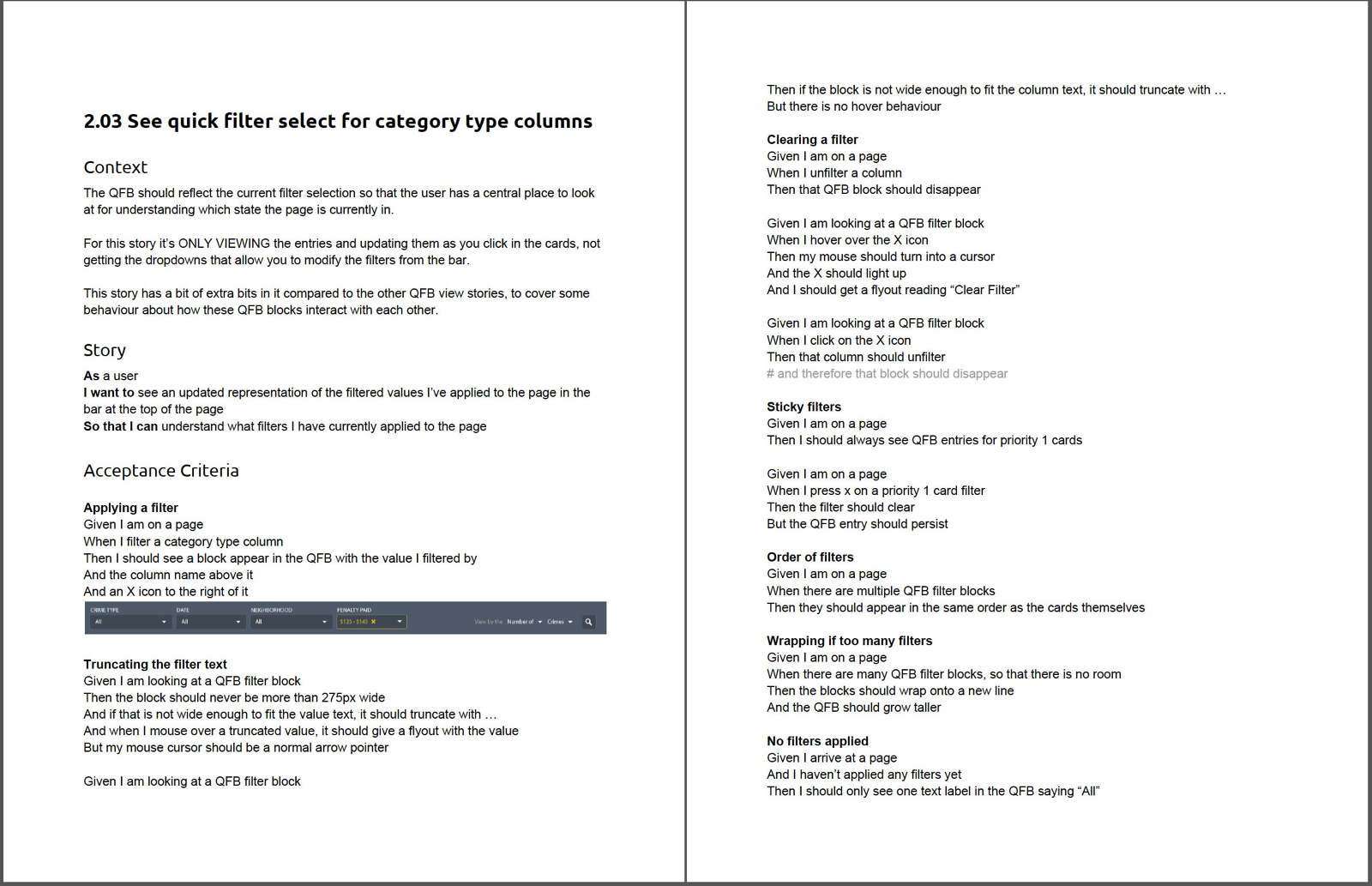
At Socrata, my UX team wrote all stories for development and test teams, including detailed specs on expected behavior and layout as acceptance criteria. This gave us high control over implementation fidelity and automated test coverage—a huge time and cost saver.
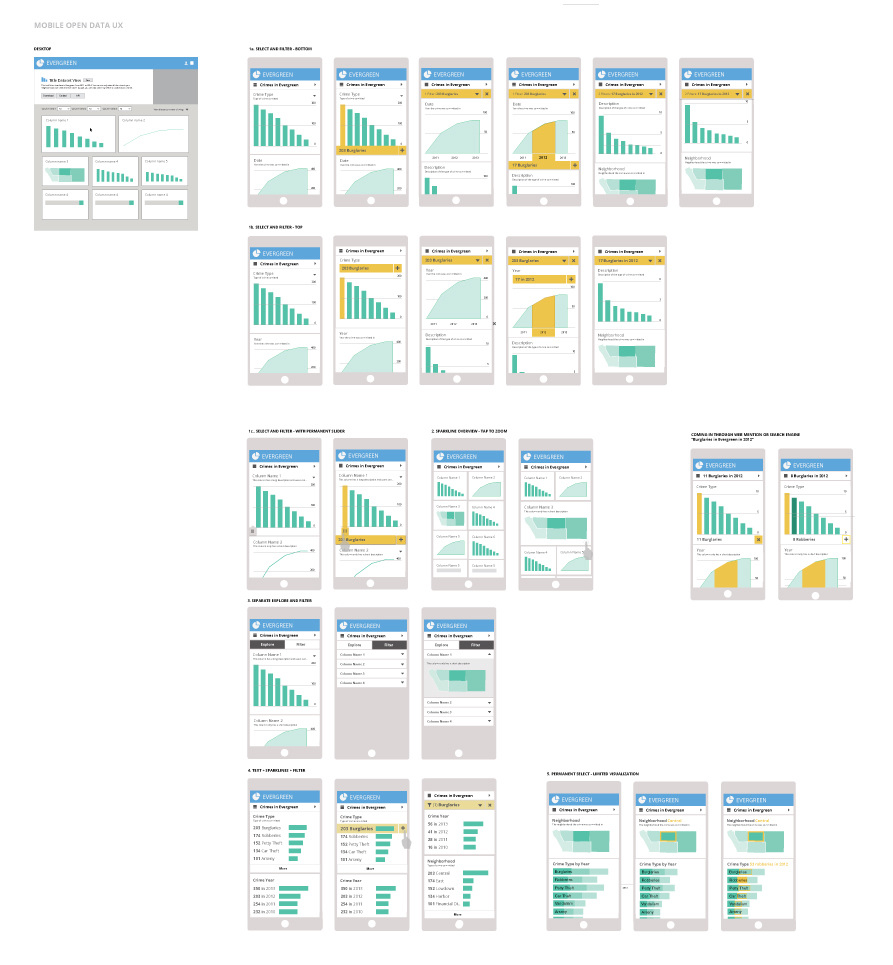
All Socrata applications needed to be easily consumable on mobile devices with experiences similar to desktop, as visualizations were often part of larger narratives spanning both contexts.